













































In the UK, many businesses provide their employees with company cars and vehicles to ensure the smooth conduct of operations. These company vehicles fall under the category of “Benefits-in-Kind” (BiKs). Among these benefits, fuel cards have emerged as a widely popular and cost-efficient method for companies to manage their vehicle-related fuel expenses.
Understanding how fuel cards work in the UK is quite significant, including who can use them, how they benefit employers and employees, and what tax aspects are tied to them.
What Is A Fuel Card?
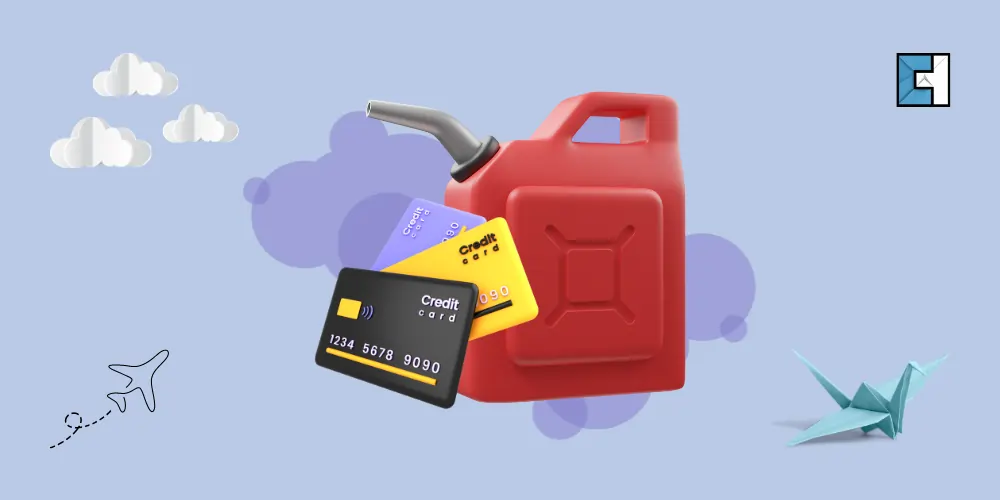
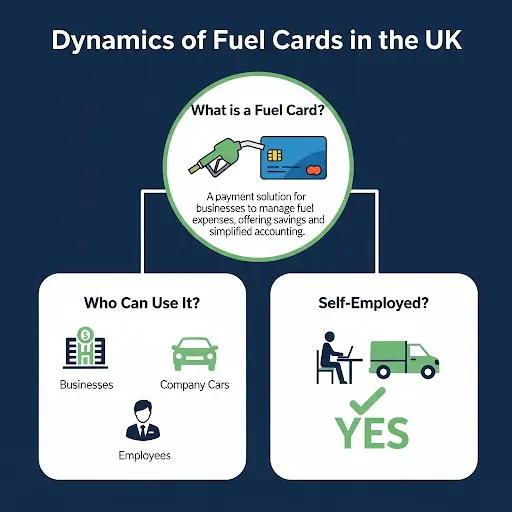
Fuel cards are payment cards that companies provide to their employees for the exclusive purpose of purchasing fuel for their business travel. In some cases, employees can also use them to obtain other products and services for vehicles.
A fuel card is generally similar to a credit card. However, they are mainly in place to meet the specific needs of businesses operating a vehicle fleet. For instance, they act as an alternative payment method for credit/debit cards that companies and drivers use to purchase fuel services, including petrol, diesel, HVO, and AdBlue.
Who Can Use A Fuel Card?
An employee or professional who uses a vehicle mainly for business purposes can use a fuel card in the UK. Usually, they are widely used by companies operating fleets of vehicles, such as logistics companies or courier service companies. Nevertheless, that certainly does not imply that businesses operating a limited number of vehicles cannot benefit from fuel cards. A company with a few vehicles can also secure fuel card services similar to larger businesses.
How Do Fuel Cards Work For Companies?
The following steps explain the general working of fuel cards for companies:
- Employees with fuel cards use the card at approved petrol stations to pay for fuel.
- The cost is charged directly to the company, and transactions can be viewed and managed online.
- The company repays the balance on the card after an agreed-upon credit period.
- Weekly invoices enable businesses to track fuel usage by specific drivers and purchases.
- Lastly, all the fuel purchases are combined into one single HMRC-compliant invoice, removing the need to keep receipts.
Benefits Of Fuel Cards For Businesses
Fuel cards are a go-to solution for businesses to simplify and reduce fuel expenses incurred during business-related travel.
Cost Control
Fuel cards help companies control excessive fuel spending. For instance, companies can ensure drivers only purchase fuel for work by setting or imposing transaction limits on fuel cards.
Administrative Ease
All fuel purchases are recorded, and invoices are generated automatically. Then, companies receive a single and consolidated invoice from the fuel card provider.
Easy VAT Reclaim
It is noteworthy that only businesses can reclaim VAT on business-related expenses. Now, since fuel card invoices are generally HMRC-compliant, they provide a clear breakdown of VAT on fuel purchases.
Improved Security And Fraud Prevention
Fuel cards are designed with built-in security features, including PIN protection and the ability to impose purchase restrictions, such as fuel only, specific fuel types, easy blocking in case of theft or loss, or spending limits per card/driver.
Benefits Of Fuel Cards For Employees
The following factors explain the advantages of fuel cards for employees:
Easy Handling And Billing
With fuel cards, employees can now enjoy easy handling and billing of fuel purchases without the need to make administrative expense claims.
No Use Of Personal Funds
From an employee’s perspective, no ‘out-of-pocket’ money is a worthy benefit of using company fuel cards, which brings them financial security. As the employees do not bear the brunt of the lengthy reimbursement process, they steer clear of financial strain.
Fixed Pricing
To an employee’s relief, there are some fuel cards that offer a fixed weekly price, which protects employees from bearing the hassle of daily price fluctuations at the pump. This way, employees have the peace of mind knowing that they can refuel without having to worry about a sudden, unexpected spike in the fuel price.

Understanding The Tax Implications Of Fuel Cards For Businesses And Employees
While fuel cards greatly help companies in managing fuel costs and simplifying administration, there are certain situations that, if not considered, can raise tax liabilities for both employers and employees.
Tax Implications For Employees and Employers
First and foremost, there must remain a clear distinction between business and private use of fuel for employees. If an employee uses company funds via a fuel card to pay for personal fuel and donot reimburse this back to the employer, they will face the tax liability that comes with it. Their employer will have to report their private fuel benefit on a P11D and pay the respective class 1A NIC on it, the employee will have to pay tax on this benefit through PAYE or self-assessment. The benefit is calculated under HMRC’s car fuel benefit rules.
How Can Companies Avoid the Tax Implications That Come with Fuel Cards?
Employers can avoid facing any tax liability attached to a fuel card by ensuring that employees:
- Do not use fuel cards to pay for any fuel for personal travel.
- Employees must refund the fuel expenses to the company that were incurred for any personal travel.
How Do Fuel Cards Impact VAT Reclaim For Companies?
Businesses can only reclaim VAT from HMRC on business-related expenses. Thus, if a company pays for or funds an employee’s private and personal travel, it loses the VAT paid on that fuel.
Can self-employed workers get fuel cards?
Yes, a self-employed individual can charge fuel costs through fuel cards to the company instead of paying from their personal funds. Likewise, as an employer, they can keep a steady track of their company’s fuel spending. Also, it becomes a lot easier than processing a large number of receipts.
Summary
Overall, fuel cards in the UK are undeniably a simple and immensely cost-effective method for employers to cut down on their fuel costs, enhance control, and bolster the productivity of their operations. They help in VAT claims and provide thorough insights into how much fuel has been consumed.
Employers and employees must remain aware of the tax implications of using the fuel for personal purposes. Therefore, a fuel card, when chosen carefully and managed responsibly, can result in considerable cost savings and reduce administrative responsibilities, which, in turn, contribute to the overall financial health of a business.
Additional Resources