








































If you currently work as a carer, considering self-employment gives you control over the clients you work with, your schedule, and your pay. With self-employment, you are responsible for finding clients, managing your business and accounting, fulfilling your legal obligations, and handling the day-to-day operations of your business. This guide will help you fully prepare for a positive, successful transition to self-employment.
If you are planning to become self-employed (and you currently work as a carer), figuring out where to start may take a lot of work. The following offers a few pointers about how to become self-employed and maintain financial control.
Essential Qualifications and Skills for Self-Employed Carers
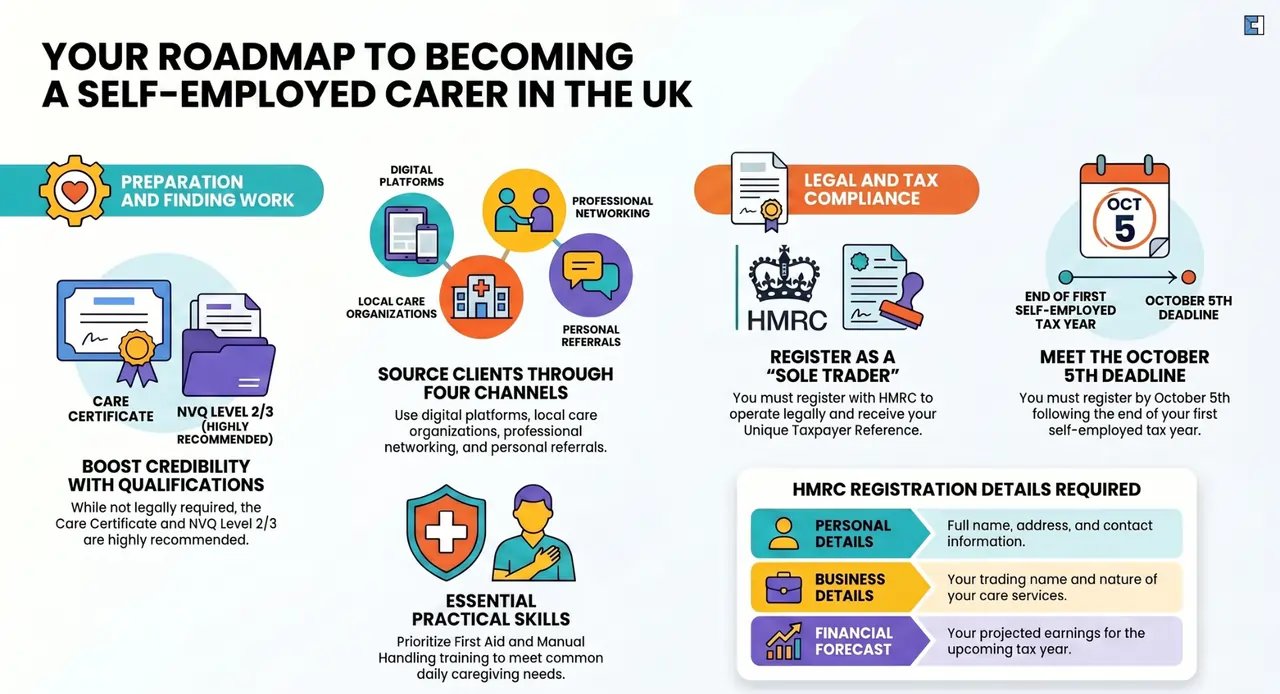
As a carer, you will have the skills and qualifications to carry out private professional care. Prior to self-employment, check what certifications you possess and allow time for any missing mandatory training. Keeping up with the latest qualifications shows private clients and referral agencies that you are a reliable professional and are up to date with the industry.
The Care Certificate, diplomas and NVQs (National Vocational Qualifications) are great starting points for new carers to illustrate the standards of the care sector and the skills and behaviours expected in the care profession. Alternatively, you may choose to self-employ after gaining experience and qualifications via an apprenticeship.
How to Optimise Healthcare Finance: Tips on Choosing a Medical Accountant
How to Find Clients as a Self-Employed Carer
Being a self-employed carer means developing a base of regular clients instead of applying for regular employment. There are several means to secure private clients for professional care.
Digital Resources
Create a profile for yourself on online care websites that allow self-employed carers to access private care clients. Be complete and thorough when listing your skills, care experience, schedules/availability, and references.
Networking
Make and foster connections with social workers, occupational therapists, offices of general practitioners, discharge units, case managers and lean on your local support networks. Self-employed carers are often referred to clients by these contacts.
Community Care Services
Care organisations often help to find work opportunities by referring self-employed practitioners. You can also provide care to people who use Direct Payments from their local authority.
Referrals
Make a habit of gathering references from past employers and current clients. You might consider creating a LinkedIn profile to provide a streamlined web presence and refer clients.
How to Register as a Self-Employed Carer?
If you’re currently employed by a care agency, care home, or another healthcare provider, becoming self-employed means changing your employment status and taking responsibility for your own business, taxes, insurance, and client relationships.
As a self-employed carer, you’ll be responsible for setting your hourly rates, finding clients, managing invoices, keeping financial records, arranging professional indemnity and public liability insurance, maintaining a valid DBS check, and ensuring compliance with HMRC requirements.
Registering with HM Revenue and Customs (HMRC)
One of the most significant changes affecting self-employed carers is the introduction of Making Tax Digital (MTD) for Income Tax Self Assessment (ITSA). This fundamentally changes how you register, maintain records, and report your income to HMRC.
To provide care as a self-employed person, you must first register with HMRC. You must register as self-employed to be compliant with legal tax requirements.
HMRC will provide you with a UTR number for future tax-related dealings.
Deadlines for Registration as a Self-Employed Carer:
You should immediately sign up as a self-employed person with HMRC. Registration deadlines are situationally dependent.
If you are currently engaged in self-employment
If you’ve just begun working for yourself, you have until October 5, after the tax year you became self-employed, to sign up.
If you’re not self-employed yet
Even if you haven’t begun working as a freelancer, you should still register as soon as you know you will.
If you fail to register on time
HMRC may impose fines if you miss the deadline. To prevent penalties, you should immediately contact HMRC and explain the circumstances.
Conclusion
Moving from employed care work to self-employment is an important career step that offers greater flexibility, independence, and earning potential. By ensuring your training remains current, building a strong client base, meeting your tax and legal obligations, and managing your business professionally, you can successfully transition into self-employed care while continuing to deliver high-quality support to your clients.
Frequently Asked Questions
Can I become self-employed if I already work as a carer?
Yes. If you’re currently employed by a care agency, care home, or another healthcare provider, you can become self-employed. You’ll need to register as self-employed with HMRC, manage your own taxes, arrange appropriate insurance, and find your own clients.
Do I need CQC registration as a self-employed carer?
Most self-employed carers providing personal care directly to clients do not need to register with the Care Quality Commission (CQC) if they are working under a personal arrangement. However, if you establish a care agency or provide regulated activities requiring registration, CQC registration may be necessary. It’s important to check whether your services fall within CQC’s registration requirements.
Can I work with private clients instead of a care agency?
Yes. Many self-employed carers work directly with private clients. You can find clients through online care platforms, local authorities, Direct Payments, referrals from healthcare professionals, networking, and recommendations from previous clients.
Can I continue caring for my current clients after becoming self-employed?
It depends on your employment contract. Some employers include restrictive covenants or non-solicitation clauses that prevent employees from approaching existing clients after leaving. Always review your contract before making the transition.
What records should a self-employed carer keep?
You should keep accurate records of your income, expenses, invoices, receipts, mileage, and tax documents. Maintaining organised records makes it easier to complete your Self Assessment tax return and comply with HMRC requirements.
Can I be employed and self-employed at the same time?
Yes. Many carers continue working part-time for an employer while building their self-employed client base. If you have both employment income and self-employed income, you must report the self-employed income to HMRC through Self Assessment.