



















































Contracting is a working arrangement in which companies hire individuals to work on a specific project, rather than as full-time employees. Contractors provide a specific skill set for a limited period as independent experts, not as employees. If you want to become a contractor in the UK, this guide covers what contracting is and the practical steps to get started.
Contractors are required in different sectors, including:
- Construction
- Education
- Finance
- Healthcare
- Engineering
- IT and more.
Learn the difference between a contractor and a freelancer and explore the best option for contracting: an Umbrella Company or a Limited Company, in these guides.
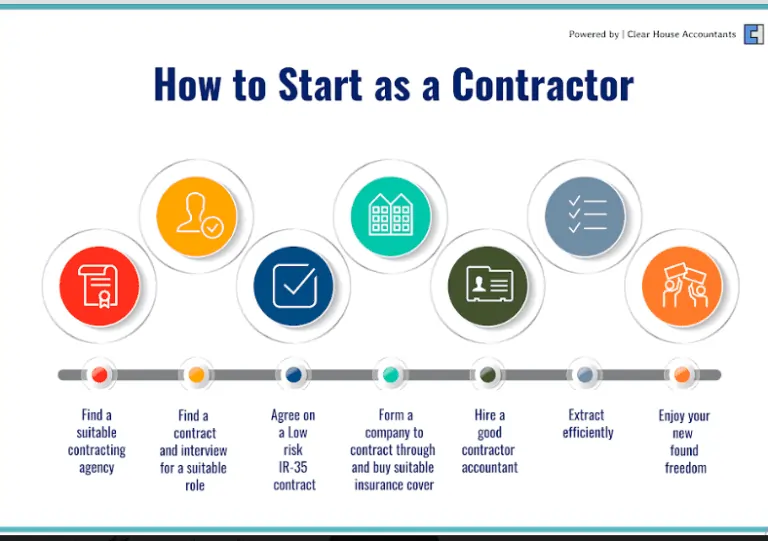
8 Steps to Become a Contractor in the UK
Before starting out as a contractor, you need to complete the legal setup, register for tax and obtain any permits or licences your industry requires. If you’re new to contracting:
1. Assess Whether Contracting is Right for You
The very first step would be to research industry demand before starting as a contractor. You should analyse the rates other contractors in your sector are charging and have a clear understanding of your tax liabilities, IR35 status, and the cost of running a contracting business.
2. Equip Yourself with Necessary Skills and Qualifications
You need to acquire the necessary qualifications and skills to get started as a contractor. Some industries might require specialised credentials to start working as a contractor. Check the specific requirements for your sector before starting.
3. Determine your IR35 Position
IR35 (off-payroll working rules) determines whether you’re taxed as an employee or a self-employed contractor. HMRC assesses this status using key tests of substitution, control, and mutuality of obligation.
Determining your IR35 status depends on your client size. For medium and large clients, the client determines your status by issuing a Status Determination Statement (SDS). For small clients, your own limited company determines your IR35 status.
From April 2025, if you are already taxed through your limited company and are later found to be inside IR35, HMRC will credit that tax against any additional liability owed, preventing double taxation.
You can check your employment status for tax and if IR35 applies to your contract in the CEST tool.
If you do not fall within HMRC’s interpretation of self-employment, please read these detailed posts to understand the consequences.
4. Choose your Contractor Business Structure
Choose the right legal structure for your contracting business. The main options are to be a sole trader, a limited company, or to operate as an employee of an umbrella company.
Working for an umbrella company is easier and less administratively demanding than running your own company. Starting as a limited company can be more tax-advantageous, and you can claim business expenses to boost your take-home pay.
If you’re unsure of the legal structure, our complete guide will help you select the right business structure for your business.
And if you have already decided on a business structure, but are unsure which business expenses to claim as a contractor? Read our article to learn about the 10 costs to claim. Contractor Expense: 10 Key Costs You Should Be Claiming
5. Register with HMRC and Companies House
If you want to set up your contractor business as a limited company, you need to register with Companies House and HMRC for Corporation Tax within three months of starting your business.
Self-employed individuals must register for Self Assessment and VAT, if applicable. Afterwards, you will receive your Unique Taxpayer Reference (UTR) and can set up your tax returns. Late registration can result in penalties.
If you pay subcontractors to do construction work, you should register as a contractor with the CIS, which is the Construction Industry Scheme. Our guide explains the scheme in depth.
6. Build Your Portfolio
To demonstrate your expertise and attract clients, you must establish a strong portfolio. Start with a professional CV tailored to the projects you want to win. The CV should be direct, concise and relevant to industry standards. Moreover, a professional website can also help you attract clients online.
If you’ve just started your contracting venture, don’t miss reading the guide to avoid the mistakes most contractors make during their early stages.
7. Find New Clients and Contracts
Use channels such as your website, social media, agencies, and job listing sites to find projects. With physical and online presence, you can secure contracts in your location and beyond.
8. Protect your Contractor Business with Insurance
Insurance protects you from various financial risks at work. The main policies to consider are public liability and professional indemnity insurance.
If you work through an umbrella company, employers’ liability insurance is provided by the umbrella company. This insurance is necessary for an employer to cover all its workers against work-related injuries.
Don’t know what insurance your business needs? Our insurance guide can be a good starting point.
Final Thoughts
Establishing a contracting business requires time, effort, and compliance. If you are looking for an accountant, we are chartered accountants in London with years of experience working with thousands of contractors, providing smart solutions to save tax and improve cash flow.
If you are thinking about contracting and do not know where to start, contact us now.